
JNL ISO 639-3
Rawat
A language of India
- ISO 639
- jnl
- Alternate Names
- Ban Manus, Ban Rauts, Bhulla, Bãt-kha, Dzanggali, Jangali, Janggali, Jhangar, Raji, Raut
- Population
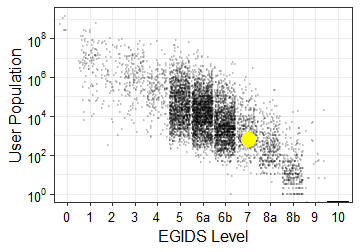
- 900 (Rastogi 2012).
- Location:
- Uttarakhand state: Pithoragarh district, north of Askot Maila, 9 villages.
- Language Status
- 7 (Shifting).
- Classification
- Sino-Tibetan, Tibeto-Burman, Western Tibeto-Burman, Himalayan, Central Himalayan, Raute-Raji
- Dialects
- None known. Extensive borrowing from areal Indo-Aryan (Kumaoni, Nepali) languages (2011 J. Fortier). Very similar to Raute [rau] and Raji [rji].
- Typology
- SOV; postpositions; genitives, articles, adjectives, numerals before noun heads; noun heads both initial and final; no noun classes or genders; content q-word initial; maximum number of suffixes 3; affixes indicate case of noun phrases; verb affixation marks person and number; passives; causatives; comparatives; CV, CVC; nontonal.
- Language Use
- All speakers use a highly mixed variety. Due to poor socio-economic status, miniscule number of speakers, fewer domains of language use, attitude of the dominant group and lack of initiative from the state, Rawat is quickly assimilating into Kumaoni [kfy] (Rastogi 2006). Home, religion. Negative attitudes. Shifting to Kumaoni [kfy] (Rastogi 2006).
- Language Development
- Younger generation taking interest in literacy.
- Language Resources
- OLAC resources in and about Rawat
- Writing
- Devanagari script [Deva], in development.
- Other Comments
- Many Indo-Aryan loans. Raute are found in Kumaon where they are known as Raji (Gurung 1997). Traditional religion.
Also Spoken in
Map
Location: Uttarakhand state: Pithoragarh district, north of Askot Maila, 9 villages.
Size and Vitality
 Click to enlarge with explanation
Place in Language Cloud
 Click to enlarge with explanation