
ZHB ISO 639-3
Zhaba
A language of China
- ISO 639
- zhb
- Alternate Names
- Bazi, Bozi, Draba, Zaba, Zha, nDrapa
- Population
- 7,800 (Gengxua and Hu 2008), decreasing. Many young monolingual speakers in Zhaba and Zhamai districts. Ethnic population: 9,000 (Gong 2007).
- Location:
- Sichuan province: Ganzi (Garzê) Tibetan autonomous prefecture, Daofu (Dawu) county, Zhaba district; Yajiang (Nyagquka) county, Zhamai district.
- Language Status
- 6b (Threatened). Language of recognized nationality: Tibetan.
- Classification
- Sino-Tibetan, Tibeto-Burman, Northeastern Tibeto-Burman, Qiangic
- Dialects
- Drate (Northern nDrapa), Drame (Southern nDrapa, Zhami). Reportedly similar to Stau (Horpa [ero]) and Queyu [qvy], but no mutual intelligibility. Many loanwords from Tibetan and Chinese varieties.
- Typology
- Verb-final; agglutinating; suffixes and prefixes, case-marking employs postpositions, case system nominative-accusative; tonal.
- Language Use
- Most use Chinese or Tibetan varieties even when they speak with other Zhaba people. Personal communication among themselves. Some young people, all adults. Negative attitudes. Regarded as useless; users strongly desire to better learn Chinese varieties.
- Language Development
- Literacy rate in L2: Low. Many in elder generation illiterate. Dictionary. Texts.
- Language Resources
- OLAC resources in and about Zhaba
- Writing
- Unwritten [Qaax].
- Other Comments
- Different from Queyu [qvy]. Buddhist.
Also Spoken in
Map
Location: Sichuan province: Ganzi (Garzê) Tibetan autonomous prefecture, Daofu (Dawu) county, Zhaba district; Yajiang (Nyagquka) county, Zhamai district.
Size and Vitality
 Click to enlarge with explanation
Place in Language Cloud
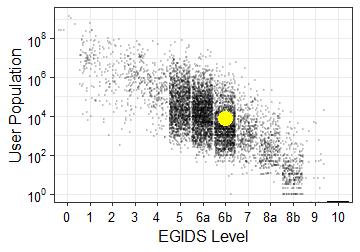 Click to enlarge with explanation